
Connection.
Trust.
Community.
Everybody wants a high-performing team, where the culture as a whole supports and accentuates the individual creativity of each member. In my decades of experience in generating and maintaining such environments, I’ve identified the following prerequisites (in order):
- Connection,
- Trust, and
- Community.
I fell in love with community design as an RA at Stanford in 1999, and have been refining my skills across the world ever since.
My real goal with every retreat is to build community. Whether the supposed goal is Mission, Vision, or Strategy — community is the launchpad for truly inspired collaboration.
Community is a bit like falling in love: It’s hard to measure but you know it when you’ve got it.
For me, Community is the natural and inevitable outgrowth of Three Dimensional Trust.
- Trust in oneself (one’s value, one’s capability, one’s efficacy)
- Trust in each other (safe and reliable relationships)
- Trust in the shared purpose and vision (usually articulated by leadership)
Similarly, that Trust is built on a foundation of connection on those same three dimensions:
- Connection to self (Why am I a part of this group? Do I belong here?)
- Connection to others (Do I understand these people? Do I like interacting with them?)
- Connection to the mission (Is there a reason beyond financial security for me to be here?)
Not Your Typical “Team-Building” Activity
I offer custom retreats to build connection and trust, which in turn lay the groundwork for community and creativity.
Whether it’s an engineering team, advisory board, or senior leadership, every retreat must be built around the interests and personalities of the participants. But they are all rooted in my personal culture of connection: Authenticity, Curiosity, and Really Good Food.
I build connection organically through loosely-structured hangouts and creative problem-solving prompts. I use cooking – and hanging-out in general – to invite people to the edge of their comfort zones. And I always establish real relationships with each participant before the retreat, so my sense of ease and goodwill becomes common currency when we all finally get together.
If you’re interested in a formulaic team-building exercise to check off some boxes, you will not be pleased. This is not hope-based team-building through Go-Kart racing and drinks. The idea is to be intentional about how our interactions are structured and what we hope to achieve, while meeting each participant where they are.
That means there’s no pressure to tearfully recount your most difficult traumas either.
The point is to stack the deck, culturally and environmentally, to allow people to do what they’ve wanted to all along: Connect with each other in a way that’s most authentically themselves.
A well-done retreat can pay dividends for years, with a palpable and dramatic shift for 12-18 months afterwards. Greater alignment. Fewer disputes. More grace. The benefit of the doubt. Esprit de corps. All of which lead inevitably towards productivity and that hallowed bottom line.
Distributed teams tend to benefit even more than centralized ones, for obvious reasons.
I measure success through participants’ sense of community and leadership’s sense of collaboration and productivity in the months following the event.
My goal is for every participant to experience more belonging, connection, trust, inspiration, and community. And for the organization as a whole to be aligned, efficient, and forgiving in the months after a retreat.
How many people can attend this Party?
I generally run two types of retreats: Small and Medium.
Small (3-8 people)
Usually done for executive teams or small groups looking for deeper connection and a shared vision. I put more emphasis on collaboration through recognition and acceptance of the deeper needs, gifts, and constraints of the parties involved. Themes often include Organizational Purpose, Vision, and Strategic Planning. Meditation services and constructive conflict coaching are sometimes involved.
Medium (8-25 people)
Usually done for start-ups or divisions in larger companies. I emphasize connection through group activities (hiking, cooking, problem-solving, etc.) and then shade into deeper trust-building work if/when appropriate.
With both retreats, the most efficient pattern seems to be a 4-day / 3-night event, starting before dinner on Day 1 and ending at lunch-time on Day 4.
Retreats always include pre-retreat interviews to determine the agenda, and I will bring any pressing organization concerns to leadership’s attention when required. Additional components (surveys, 360s, follow-ups) can be included but are not essential.
What happens during the retreat?
Every retreat is different and I have dozens of time-tested patterns at my disposal. The real work of community building can happen under a wide variety of patterns, such as:
- Cooking a giant feast together,
- Pushing our limits with a hike or backpacking trip
- Various styles of freeform brainstorming (some of them beyond space and time)
- Collective visioning sessions
- Leadership communicating vision
- Cultural healing (if repair is needed)
- Sharing individual Purpose
- Architecting group Purpose
- Night Vision (predicting and preparing for failure modes)
- User Manuals: How to communicate with awareness of each person’s likes and dislikes (rational or not!)
- Group music/dance jam sessions
Does your team need a retreat?
I love talking strategy and retreat design. If you’d like to chat about what your team needs and what’s possible, book a call or drop me a line. If it’s helpful, I can even send you a couple of mock agendas before we talk, based on retreats I’ve done in the past.
Positive culture, safety, and trust don’t build themselves. Give me a call and I can give you some pointers about how to make your next retreat a investment in long-term collaboration.
Ankur Shah Delight
Let’s become the species we want to see in the world
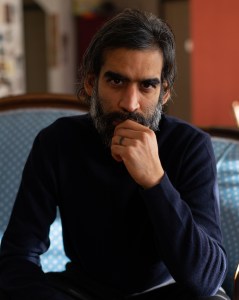
 Ankur Shah Delight: Community and Conflict